Advent prompts

December 1: Winter words
We start the month with a straight-up list. Words which are exclusively reserved for winter. Set yourself a time limit: 2 – 5 minutes? Include names of places, things, people. Brand names. Words that capture a moment. Sounds. Weather. Warmth and cold. This is a big theme – take it where you want or where it takes you. Have fun curating your very own collection of winter words. Ask someone else to do the same task, then compare. How different/similar are your lists? Is there anything you’d like to take from each other’s lists?
december 2: Little trees
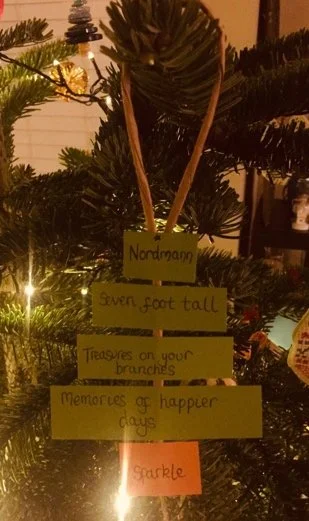
Here is an idea for how to give the gift of writing to someone special. The ‘cinquain’ is a 5-line poem invented by Adelaide Crapsey (real name) in the early 20th century. It has a neat structure which goes like this:
line 1: 2 syllables
line 2: 4 syllables
line 3: 6 syllables
line 4: 8 syllables
line 5: 2 syllables
And, because of the amount of syllables on each line, you can easily make the poem into the shape of a tree. Once you’ve composed your cinquain masterpiece, write each line on a separate strip of card/paper/old Christmas cards/whatever you can lay your hands on and arrange in a tree-like fashion. Once you’re done, carefully turn over each strip and attach some string or thread using tape on the back of each piece.

december 3: stories by firelight
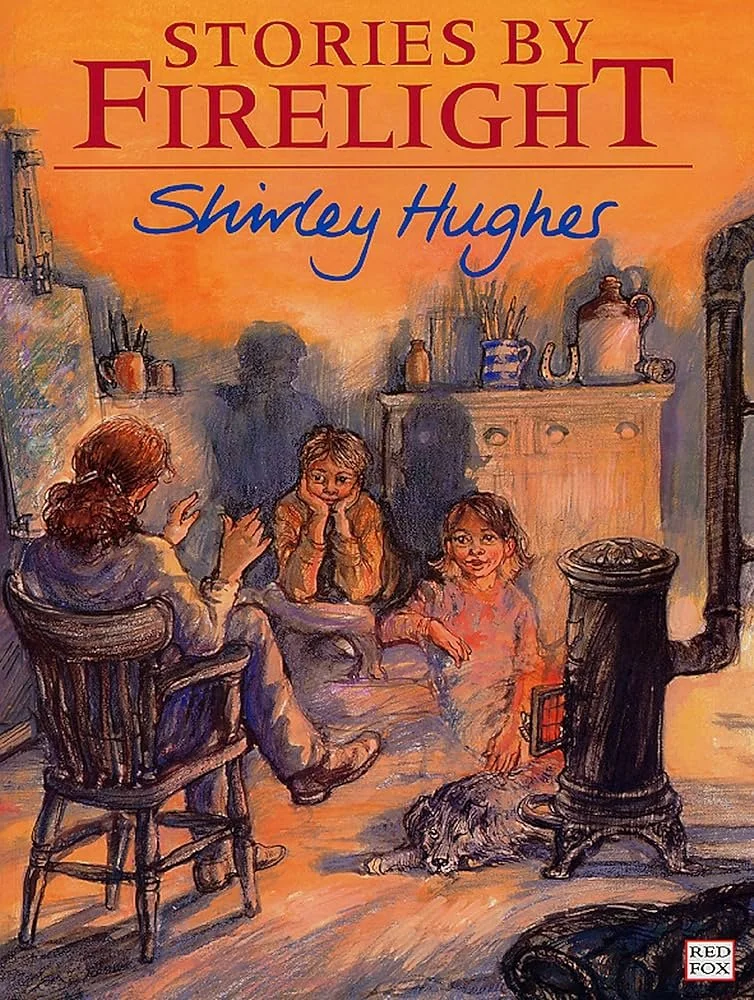
This is a fine storybook for winter nights. Here are stories and poems that evoke winter, stories that need to be told snuggled up warm on the sofa, and a fire blazing. The particular pleasure of the book lies in Shirley Hughes’ atmospheric illustrations, they are integral to the text and go well beyond it. There’s a selkie story and a story of a bonfire with grandpa. These are special stories to be read together. And pictures that invite readers in to elaborate their own stories.
I am old enough to remember running down the cold stairs in the morning to get dressed in front of the fire. Sometimes, when I was ill in bed, my mother would light a fire in the tiny grate in my bedroom and at night I lay in the dark, the shadows made by the flames dancing across the walls.
What are your memories of firesides? When and where? What stories do you have to tell?
december 4: spices and wood smoke - Scents of the Season
There is nothing more evocative of the festive season than the smell of spices; particularly cinnamon and cloves. There are a myriad of smells we experience during autumn/winter but not really at other times of the year. I made a list. You should make one too.
Let’s share. Here are some of my scents:
Freshly baked gingerbread men; roasted chestnuts; toffee apples; bonfire; cranberries cooking on the stove; oranges studded with cloves; Bailey’s Irish Cream; wodsmoke from a nearby chimney; the cold
Choose one of the scents from your list and use it as a starting point to write in more detail.
december 5: christmas cards
What could be lovelier than writing a line or so to a friend whom you haven’t seen for many months? And how thrilling to receive something other than junk in the post. The last few years have seen me establish a new tradition of lighting a single candle, digging out my fountain pen - usually found languishing at the back of the bureau for the other eleven months of the year - and writing my cards by the flickering festive light of the flame. The perfect way to get the season started.

(Until a couple of years ago, I was under the impression that everyone still sends these little bits of cardboard loveliness despite the technological age we live in. Then, I happened to ask one friend how they afforded such quality cards not hailing from multipacks. I was shocked to learn that as I was their only Christmas card recipient, she went all out on that one card. Hurrah for me but what does this say for this more than 180 year-old tradition? Other friends prefer to give the money they would’ve spent on cards to charity. Fair enough, but I always make sure to buy cards which donate a proportion to charity. Most importantly, have we lost part of our festive cheer and heritage amidst the busy consumerism of modern Christmas?)
december 6: Harvey Slumfenburger’s Christmas Present
This is one of our favourite Christmas books. It begins at the end of a long, tiring Christmas Eve. Father Christmas has put his exhausted reindeer to bed and is just about to climb into his own, when he notices that there is still one, small present in his sack. It is for Harvey Slumfenburger who lives far, far away on Roly Poly Mountain and whose parents are too poor to buy him any presents. There is nothing for Father Christmas to do but to put on his red Father Christmas coat over his blue and white striped pyjamas and set off to take the boy his present. So Father Christmas sets off on the long journey helped by all kinds of people and overcoming one accident after another.
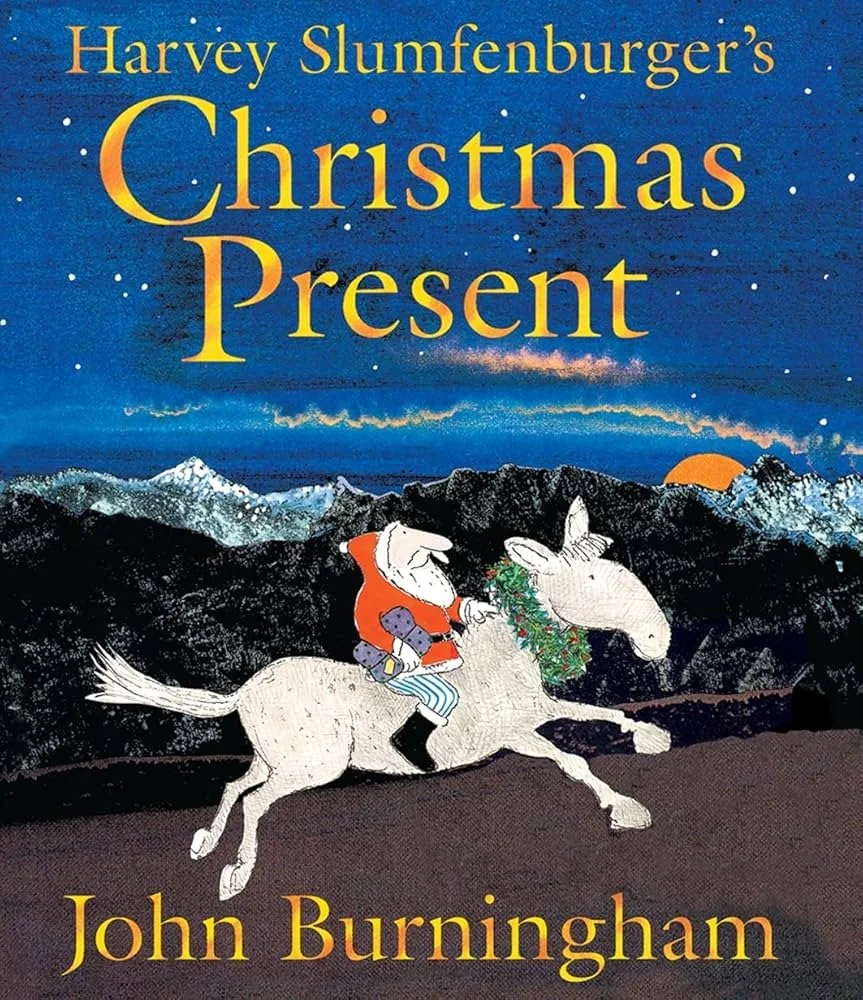
John Burningham’s intrepid Father Christmas travels there and back through beautiful, wintry water colour wash.
This has become a writing and making activity which we return to every year as it is always so much enjoyed and children approach it differently as they grow older. It is a simple and absorbing idea. Once you have shared the story with your writers, provide them with a good-sized concertina book made with heavy weight paper. You can start with four pages. More can be added if required.
Young writers will work with pencil, pen and water colour pencils, imitating the watercolour washes that Burningham uses. Have prepared multiple images of Father Christmas copied from the book and cut out individually. These can be stuck onto the page and they overcome any initial fear of drawing a figure. Writers choose from these images to tell their own story of Father Christmas out delivering presents. Our experience is that once the cut images are set out on paper, the drawing of surroundings and narrating of events comes easily.
december 7: letters sent and unsent
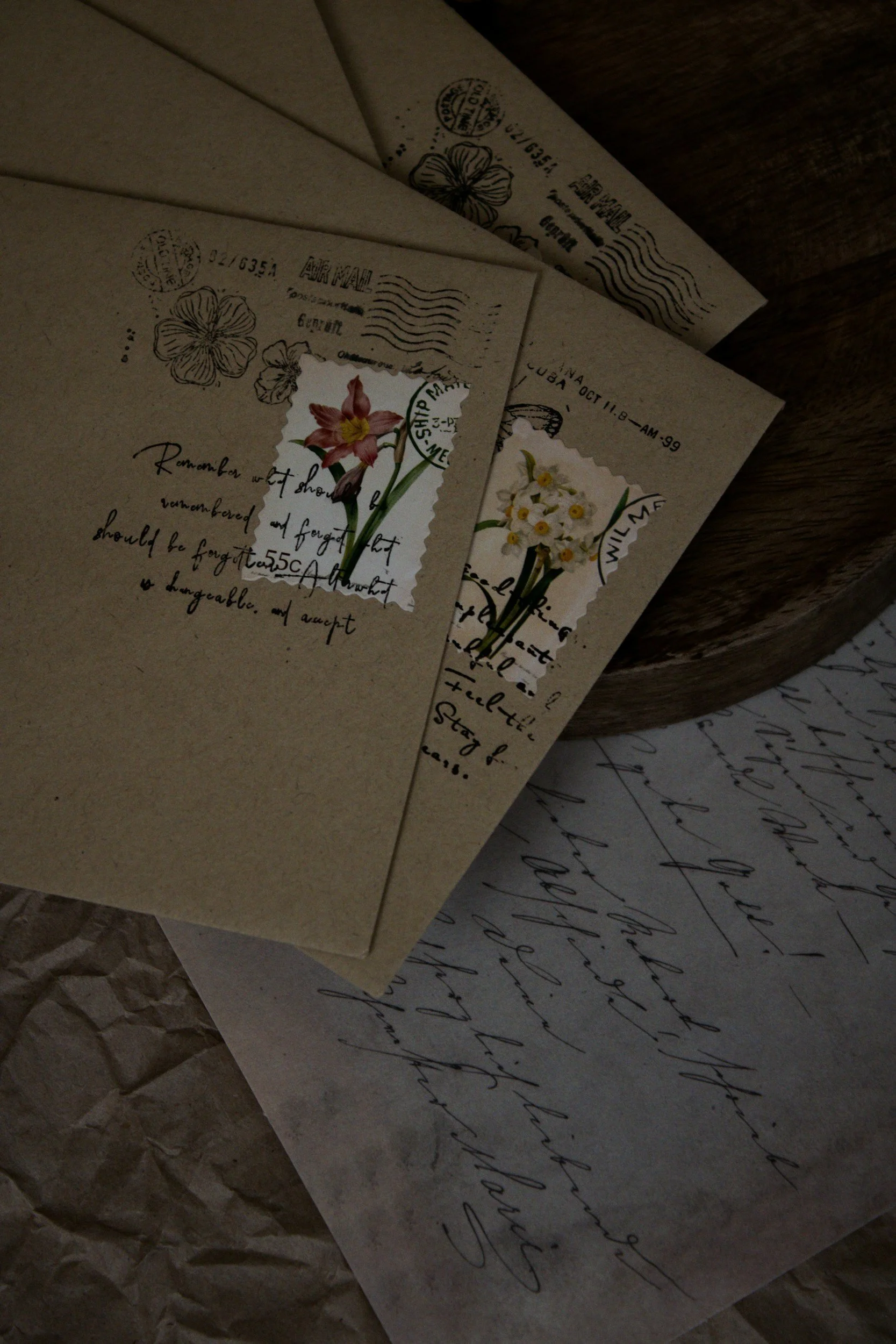
It may have fallen out of fashion, but who doesn’t love the post? Sending and receiving letters, cards, postcards - even a parcel sometimes, is a simple joy. Letter writing is also a wonderful way to find out more about your own voice: if you write to someone you know well, you may find yourself echoing in writing the ways in which you talk to that friend through the levels of informality and the use of shared words and sayings. It is a way of connecting in a slower, gentler way than a quick e-mail or Whatsapp message. Stamps have become expensive, but you may be able to post your letter by hand; or you may write an unsent letter. The letter you don’t send can be written to someone who is no longer here, or whom you’ve never met (for me, three grandparents and a great uncle, for starters). It may also be written but not sent because you are not yet ready to send it.
When children write a letter that a character (from a book or one whom they have invented) might send, their writing becomes livelier. They take on the other’s voice and seem to imagine who they are writing to. You could try that, too. If you like writing fiction, try writing the letter that one of your characters might send.
You may have already heard of the Sunday Letter Project. It was started by a young couple who run a stationery shop and studio, prompted by the number of people who came into their shop who regretted how few people wrote letters any more. Their project is simply to form a community of letter writers who sign a pledge to write a letter once a week. As they say on their website, the time taken to sit down and write is as beneficial for the writer as it is for the recipient.
Why not take time to write a letter today, sent or unsent?
December 8: Lights in winter
In the Northern hemisphere winter brings shorter days and long dark nights, the further north, the longer the darkness. No wonder we turn to light of all kinds during the winter months: candles, the festive town lights, a burning Yule log, the soft glow of a child’s night light, the moon and stars and the pale wintry sun..
Make a list – all the lights you can think of, fluorescent, shaded, flickering, twinkling. Some lights may remind you of a particular time and place, some may have connections far beyond the light itself.
And if you would like, freewrite. Choose one of the lights from your list and let the pen go.
9 December: The Christmas Chronicles by Nigel Slater
There is one book that I am always in a rush to dust off when the winter season descends. Yes, Nigel Slater is a cook. No, I am not good at cooking and yes, I take minimal pleasure in being in the kitchen. Yet, I find his 2017 book The Christmas Chronicles is just what it claims to be: Notes, stories and 100 essential recipes for midwinter. It is like pulling out a favourite jumper and sinking into it again.
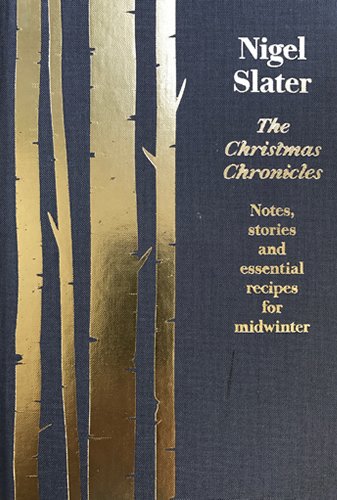
You can dip in and out. I mainly read all the notes and stories, drool over the pictures of food and then write a list of what I think my partner (who loves cooking) should have a go at making.
It is exceptionally tricky to choose just one extract for today’s advent treat but here it is:
Winter food is about both celebration and survival. It is about feasting – roast turkey, plum pudding and fruit cake; frugality – bean soups and mugs of miso broth; it is the food of hope – lentil soup for good luck on New Year’s Eve and the food of love – the mug of hot, cardamom-spiced chocolate you make for a loved one on a freezing day. p.14-15
Get writing: food. Comfort food/winter food/cosy food. Perhaps make a list to start and then see where you get taken. Treat yourself to something delicious afterwards.
10 December: winter walk

Writing and walking go together almost inevitably. There are famous walking writers: Dickens and Woolf roamed London streets, often at night. For Dickens, especially, these roamings informed his novels. Many writers find that that the rhythm of walking, out in the open air, helps them to compose, breaks open a block, coaxes ideas out of hiding and jiggles them together in ways that please the ear.
One writing teacher set herself the task of writing about her walk to school each day. The short pieces she wrote were full of detailed magic. She saw things that she had not noticed before, began to see patterns, began to look in different ways.
Take the opportunity to walk. Perhaps a quick walk after nightfall or early morning in the dark. Maybe a longer walk when you have time. You will see your neighbourhood in a new way. Who still has the pumpkins out? What lights do you notice? What is that cat, sneaking beneath the hydrangeas, thinking? You don’t need to go far. Just take notice and when you get back, capture something that you have seen on paper.
11 December: an angel tree
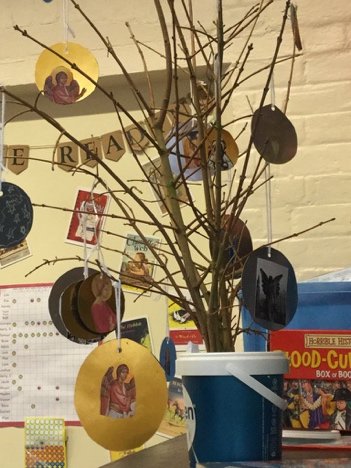
Here is a tree of wishes and gifts to family and friends, to your class, to the group. Wishes are written on card discs and hung on the tree. These can be quite conventional wishes, a single word, ‘love’, or ‘peace’, or ‘happiness’. Or you might like to add a little something.
One year we took Michael Laskey’s idea, ‘If it could be wrapped’ and so the things we wrote on our card discs were special wishes for others that could not be wrapped in paper: ‘some peace and quiet in the evening’, ‘a big snuggle’, ‘a tidy bedroom’, ‘a walk across the fields’. Or you could be inspired by Robert Crawford’s, Clan Donald’s Call to Battle at Harlaw. It’s a call to battle but the form works well. Here is part of Hannah Swain’s poem for her children based on Crawford’s, taken from Smith and Wrigley (2016) An Introduction to Teachers’ Writing Groups (p 42):
Be adventurous
Be brave and busy
Be caring, curious, calm and crazy
Be different
Be enthusiastic, explorative and empathetic
Be fearless, be full of fun, be a friend
Hannah Swain
A quick how to:
Materials
A collection of pictures of angels from old cards, magazines etc. You can use other images, of course.
Coloured card discs.
A selection of pens –black, white, silver, gold.
Ribbon, string or thread.
A small bare branch or collection of branches fixed into a container –a jar, a weighted tin, whatever you have.
Each person chooses an angel image. Cut round it so that it will fit in the card and glue it down. Make a hole in the top of the medallion with a hole punch. Write your wish on the card that backs the angel image. Thread ribbon or string through the hole at the top of the medallion. Hang the medallions on the branches of the tree.
12 December: The joy of charity shops for the writing teacher
On every local high street there are shops full of the unpredictable. You never know what you will find there, from the highly practical to the flight of fancy. Here, you can top up your stationery store, kit out your heroine, discover a favourite author. You can visit with something in mind, but you must hold that thought loosely, it cannot be guaranteed. On the other hand, you may find just the thing you never knew you needed. Charity shops not only raise money for good causes, they provide a marvellous service for the writing teacher! Charity shops, like much good writing, often surprise us. The things we find there can change our thoughts, multiply possibilities, enrich our resources. Enjoy a charity shop for your own writing: visit one and find a character amongst the coats and dresses, let an object pose a question you must answer, find a book that proposes a way of thinking, or pick a book title to start you writing. Have fun. You might look for:
Stationery supplies: here you can find materials for book-making and decorating; and the range of stationery that intrigues and often shapes writing for the youngest writers. What might there be? Paper of all kinds; postcards; envelopes; printed invitations; stickers, hole punches, stencils, decorative stamps, ink pads, bulldog clips, notebooks, clip boards, Selotape, washi tape, scissors, stencils, sticky notes.
Books: children’s books are often high quality and worth adding to a class library; often we find unusual picture books that may now be out of print but which provide wonderful models for young writers. It is worth looking among the adult books for all kinds of texts: old recipe books, Gilbert White and other nature writers, old-fashioned text books and instruction manuals all provide different ways of writing and of using language. They are often beautifully illustrated which in itself is an inspiration.

Paper miscellanea includes maps, knitting patterns, guide books, picture postcards (even better if they have a written message), old magazines, sheet music. We use these as part of book-making and as prompts for writing.
Clothes and accessories provide the basis for character development and storytelling: we have a collection of gloves (wear a heavy work glove or lace elbow length glove with pearl buttons and one becomes that character, hands move accordingly), hats are good, rings and badges, a bow tie, a pair of bear’s ears…
Bric-a-brac and toys also provide the basis for writing of all kinds: close description, evocation of a setting, mysterious boxes, precious treasure, small figures in a story about to happen.
Happy hunting!
13 December: The christmas wren
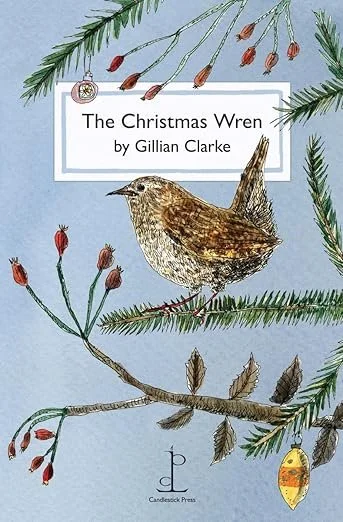
Here is a lucky charity shop find, a pamphlet in the Candlewick Press series: The Christmas Wren by Gillian Clarke. It was commissioned by the Dylan Thomas Centre and written in response to Dylan Thomas’s A Child’s Christmas in Wales. Filled with stories of Christmas past. It begins like this:
Once there was a house by a lake, and inside it another house – a white farm, its rooms full of waves breaking, and inside the farm a tall red house where at night the foghorn moaned far out at sea like a lost moon. And inside all of them was Christmas.
Christmas was kept in a box in the loft all year, until….
Gillian Clarke finds her memories wrapped amongst the decorations kept in that box all year. She gives us glimpses of Christmases in three different houses prompted by the “trees, baubles and all the shining Christmases unwrapped one by one from their tissue paper.”
At the end of the story is a surprise, and, throughout, a sense of the muddle of family and the magic of the time.
Today’s writing prompt: Do you have a box of decorations? Are there some that hold particular memories. You could begin with a single bauble, describe it, say how it came to be in your collection and let it lead you into a memory of a particular time and place at Christmas and the people who were there.
14 December: winter hedgerows
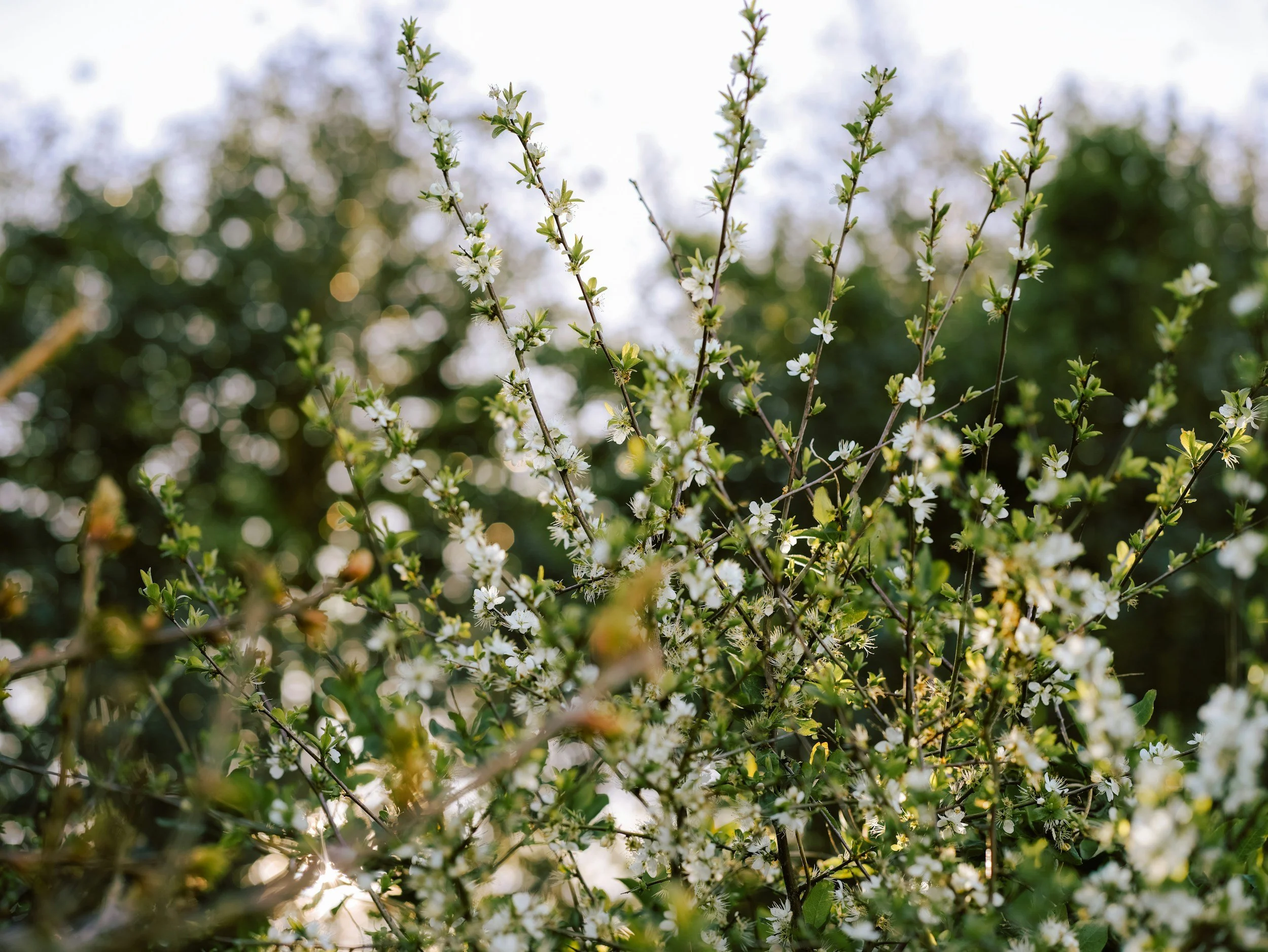
Much of November was unseasonably warm. The wild hedgerows near my home were scruffy masses of gone-over prickly blackberry brambles and the odd spattering of ivy beginning to show through, though I suspect it has been there all year long, just waiting for its moment to shine.
A few weeks later and snow and frost has descended in central London. The scraggly hedgerows still support a large selection of autumn leaves and on closer inspection, they are also home to an empty cheese and onion crisp packet and a Starbucks cup. These hedgerows form the boundary between a tiny patch of green space and the path to Regent’s Street. A family of rats scuttle in and out, never overstepping the boundary of the hedgerow.
Today’s writing prompt: Go and find your hedgerows, perhaps follow one to an unknown destination. Take a pen and paper with you or, on your return, get down to an uninterrupted five minutes of writing.
15 December: How Does Santa Get Down the Chimney?
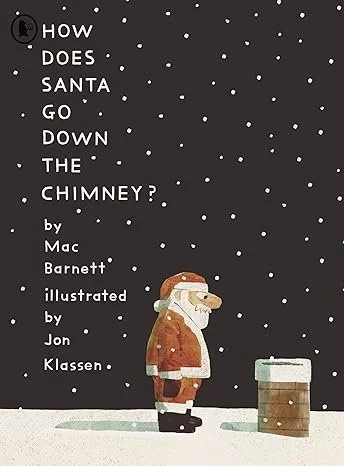
Mac Barnett is the master of taking a simple idea and making it funny, surprising and joyous. At the same time, it is hard to beat the inimitable style of Jon Klassen’s illustrations.
So How Does Santa Go Down The Chimney? (2023) should feature in everyone’s collection of Christmas books.
A series of questions about the problems Santa faces on his busiest night of the year will spark wild and wonderful conversation with children - and give adults the chance to think up some answers to cover all bases about the logistics Santa’s task on Christmas Eve.
And if you don’t have a chimney…what happens then?
This book perfectly lends itself as a writing model for children (and adults) of all ages.
A zigzag book of houses would make an exciting structure to write on, particularly for younger children.
Today’s writing prompt: Ask the questions. Spend some time remembering how you puzzled all this out as a child - and what answers you were given or came up with. How does Santa get down the chimney?
16 December: the change in season
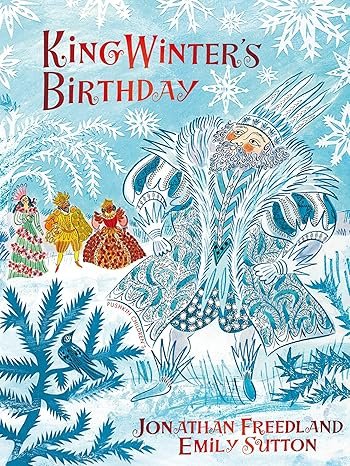
King Winter’s Birthday is a welcome addition to any collection of wintry stories. It was inspired by a story of the same name written by a German-Jewish author, Ulrich Alexander Boschwitz, written while he was interned on the Isle of Man during the Second World War. It is a story of chaos amongst the seasons and order re-established, timely for our era of climate change and reassuring for young readers. King Winter wants his three brothers and sisters with him to celebrate his winter birthday. They all join him and you can imagine what happens. Everyone was at sixes and sevens. So the siblings agree to go back to their right times and places and although King Winter misses his family, he has the memory of their time spent together and that keeps him warm.
The book is really beautifully illustrated by Emily Sutton. It is a feast for the eye.
And in The Observer on December 1st 2024, Jonathan Freedland relates how he came to create this book with Emily Sutton.
Today’s writing prompt: If you find the book, you may find that one of its illustrations inspires you to write. Or think about the change in the seasons. What is the coldest winter you remember? Hard frosts? Deep snow? Or a warm winter? Where were you? What were you doing?
17 December: writing as a gift for others

Last Christmas I was very ill and in the midst of receiving cancer treatment. I could not think of a single thing that I could buy my partner, who was looking equally battered and bruised by the strain of supporting our family through this terrible time. I took a card featuring a picture of Raymond Briggs’ 1973 classic, Father Christmas, and wrote all the words that I could not say but felt so strongly. There was truly nothing else that I could give him that didn’t seem meaningless in comparison. Because words are a gift. Children know this instinctively, they scrawl across reams of paper and present it to us, a present. We forget this as adults. We send cold messages on Whatsapp that feel as if they evaporate to nowhere. I buy nice stationery for others who are fond of writing but very rarely do I actually give writing. Yet it is the most thoughtful gift that can be given.
It needn’t be lots of words, maybe just one, but how will you send writing as a gift this Christmas?
18 December: advent street
An irresistible pocket-sized Christmas poem with words by Carol Ann Duffy and illustrations by Yelena Bryksenkova. The former Poet Laureate invites us to follow a heartbroken central character as she moves to Advent Street and becomes a flaneur, allowing herself and the reader a peek into the gifts behind each window on the street. From a girl stumbling over the notes of O Little Town of Bethlehem on the piano to nine Hanukkah candles flickering between a pair of curtains you are sure to find warmth radiating from every page.
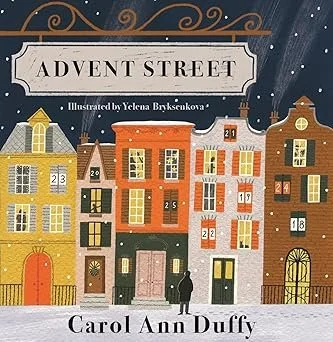
If you like this little treat of a book, there are several other hard-back festive books from Picador publishers to explore.
And my favourite passage of wise words:
Under your coat,
who knew or cared what you were?
A dark figure, glancing up
at the moon; its attendant star,
a curious child.
What might you write today? Try writing your own Advent Street; you be the flaneur down the street where you live, at this time of year.
19 December: weather forecast
Day 19 Weather Forecast
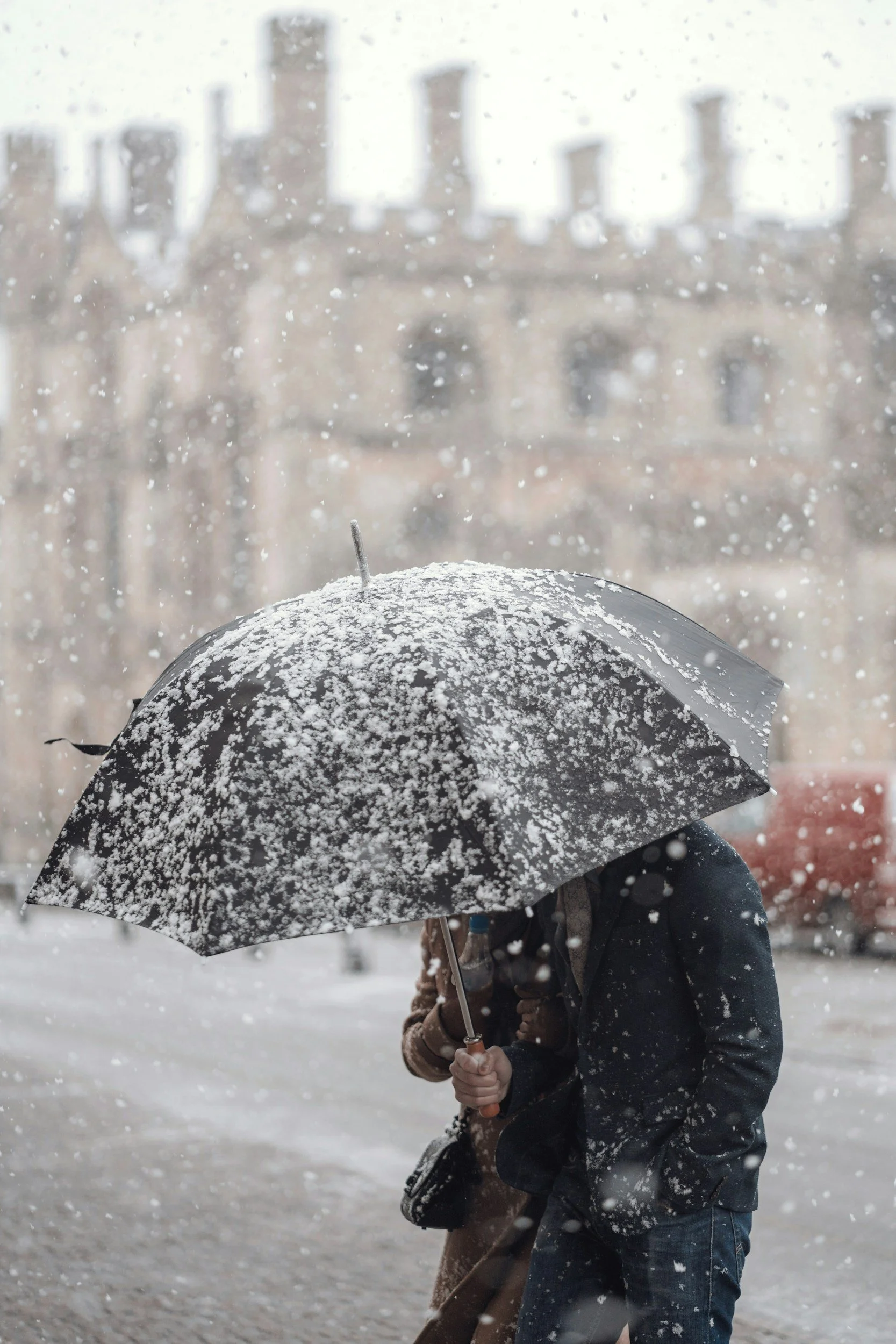
What is the weather like today?
Yesterday?
This week?
Make a note.
Remember the weather another year: drenching rain, deep snow, or maybe an exotic beach somewhere.
Write the weather.
20 December: childhood christmas
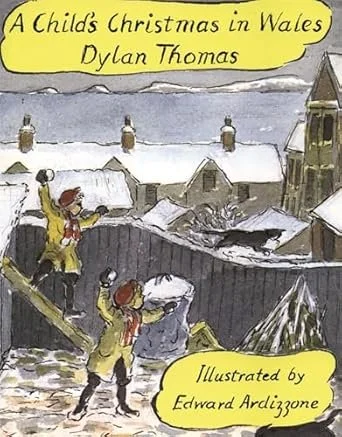
A Child’s Christmas in Wales by Dylan Thomas was first published in 1978. It describes a kind of Christmas that barely exists any more, even in our memories. It remains a wonderful evocation of Christmas time, family gatherings, food and drink, out roistering with the other boys and there was, of course, snow.
One of the great things, I find, about belonging to a teachers’ writing group, is that we quite frequently generate great texts to read with younger writers, when the original text that inspired our writing is beyond the reach of those we teach. A Child’s Christmas in Wales inspires us to write about our stories of Christmas in ways that are more recognisable for younger writers. However, they also enjoy many elements of the original. There are the lists of Useful Presents: ‘zebra scarfs of a substance like silky gum that could be tug-o’-warred down to the galoshes, …And pictureless books in which small boys though warned with quotations not to, would skate on Farmer Giles’ pond and did and drowned; and books that told me everything about the wasp, except why.’ And Useless Presents: ‘Bags of moist and many-coloured jelly babies and a folded flag and a false nose and a tram-conductor’s cap; …never a catapult … Hardboileds, toffee, fudge and allsorts, crunches, cracknels, humbugs, glaciers…..’ You get the idea. And ‘There were always Uncles at Christmas’ and mothers aunts and sisters scuttling to and fro, bearing tureens and Auntie Bessie, who had already been frightened, twice, by a clockwork mouse, whimpering at the sideboard and reaching for the elderberry wine.
I have a Puffin edition, illustrated by Edward Ardizzone, but you can find the text on-line as part of the Australian Gutenburg project.
Have a look. Try your hand at writing about your own childhood Christmas or your children’s Christmas, in Hackney, or Levenshulme, Peebles or Bristol. It is the kind of thing that others would love to read. Maybe there is even a small gift wrapped up in this bit of writing.

21 December: readers all
What are you reading at the moment? Maybe you’ve had little time to read, so what’s the plan for the holiday? What’s been the all time great this year? What books will you be giving?
Five minutes on reading, now. Go!
22 December: the magic of winter
The thing about winter is that it is full of little snippets of magic, often unexpected, often fleeting. For me, the magic largely abounds in the way we get to use light at this time of year, when the natural sort is in short supply. A flash of sparkly lights in a garden as you drive past, the flicker of a tealight on the dinner table, the twinkling of fairy lights on the newly-dressed tree.
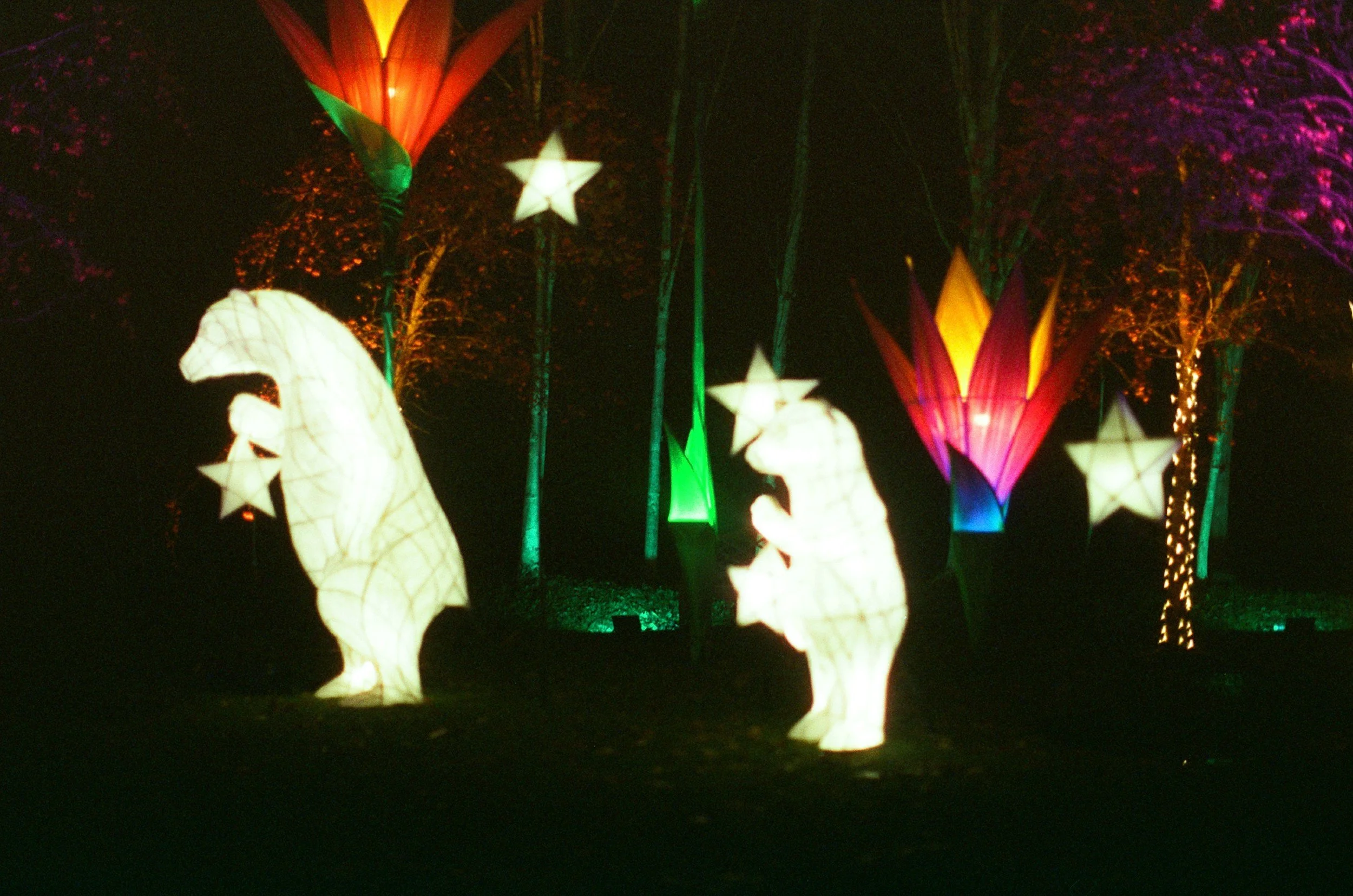
Many Christmases ago, the magic came to the primary school where I was teaching. The whole school had painstakingly worked to create beautiful willow lanterns and wands for our Christmas performance of a show we had called, ‘Fire and Ice’. The moment of the procession around the unlit school field came, around 70 lanterns and wands had their battery-powered tealights or light strings switched on. The children walked around the perimeter of the field while the audience gathered outside the village hall to watch. Little did we know, snow had been laying across the field and so the little lights bobbed around on a white blanket. True magic.
Today’s writing prompt: Write about a memory you have of winter magic.

23 December: glad rags
What will you be wearing this festive season? Will there be sequins? Velvet? Matching family PJs? Has there been a Christmas Jumper? What’s the dress code?
Give us glad rags - five minutes – maybe make it ten- in all their glory!

24 December: a moment of quiet
It’s a busy time of year. Excitement is often high, especially if there are children in the house.
Find a moment of quiet for yourself. Sit, pen in hand.
What are you thinking?
Remembering?
Looking forward to?
Write. Capture the moment on paper.
We wish you a peaceful and loving Christmas time.
Happy writing!